
Welcome!
This multimedia resource was created to help young environmentalists like you understand key ocean conservation challenges and the solutions already underway in coastal communities, including work being led by Coastal First Nations.
Ocean literacy is understanding the ocean’s influence on us and our influence on the ocean, recognizing its vital role in climate, food, and life, and knowing how to act responsibly towards it. Upholding this responsibility means taking care of oceans, as well as its numerous interconnected ecosystems – watersheds, rivers, estuaries and intertidal zones.
Ocean literacy matters. It empowers informed decisions, fosters sustainable practices, and builds a collective effort to protect this shared resource for future generations.
Are you ready to dig deeper? Through expert interviews, place-based stories, and practical knowledge, this course highlights stewardship approaches that protect marine ecosystems and support thriving futures. Explore the modules below, learn from local leaders, and use these materials to deepen your own impact.
Disclaimer: These stories are complex and evolving. They reflect a snapshot in time, shaped by available science, lived experience, and ongoing debates. This resource cannot capture every perspective, place, or challenge, and it should not be read as a complete or definitive account. Instead, it is an invitation to keep learning, seek out diverse voices, and explore the many layers of knowledge that inform ocean stewardship.
To get the most out of this mini course
- Stay curious. Approach each section with an open mind and a willingness to learn from diverse perspectives and lived experiences.
- Go at your own pace. The content is intentionally bite-sized – set aside roughly 60 minutes to work through it in full, one piece at a time. Feel free to return to content that sparks something for you.
- Dig deeper. Follow the links, examples, and stories to explore these complex topics in more detail. Use this as a starting point for your own research and learning.
Let’s get started.
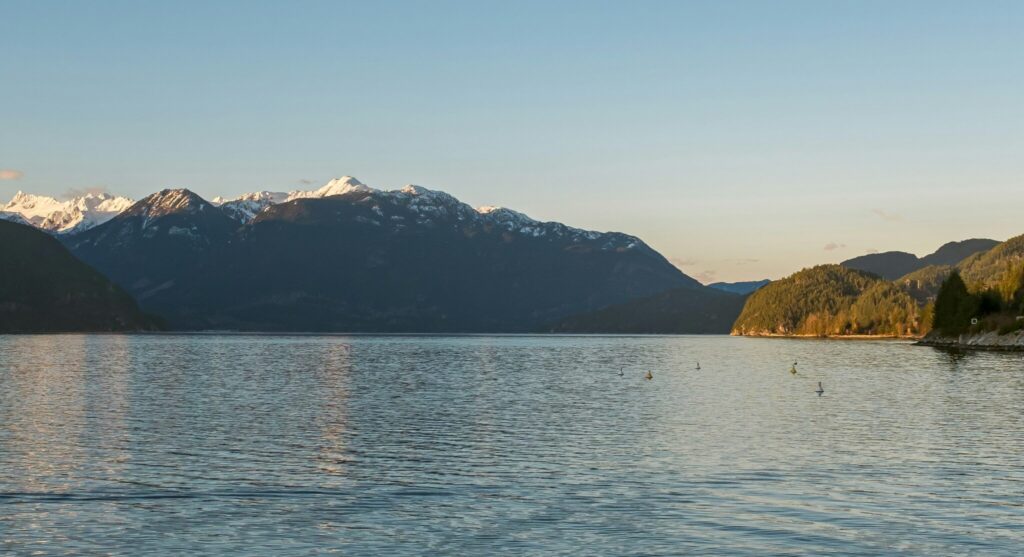
What comes to mind when you think about the ocean – perhaps the deep blue, mysterious creatures, or coral reefs? Do you also think about forests or the food on your plate? What about your career, the air you breathe, or the safety of your community?
The ocean is essential to life as we know it. You might say that it connects humans to our ancient past and to human evolution.
Covering 70% of the Earth’s surface, it’s home to most of the world’s biodiversity – in other words, it has the largest variety of living things on the planet. The ocean also helps regulate our climate, purify water, circulate energy, and protect coastlines.
What the ocean gives:
Jobs
More than 100,000 people in B.C. depend on the ocean for their livelihoods, from fishing and cargo transport to tourism and conservation.
Biodiversity
British Columbia is the province with the largest variety of living things in Canada, and thousands of these species rely on the ocean for survival.
Wellbeing
Studies show that spending time near the sea is linked to better mental health.
With more than 25,000 km of coastline and 6,500 islands, you can’t separate life in British Columbia from the health of the ocean. For thousands of years, coastal Indigenous communities have depended on the sea for sustenance, livelihoods, and the practice of traditional stewardship. Today, more people than ever before rely on these waters for energy, transport, leisure, and resources. How is that affecting the ocean – and in turn – us?
Our relationship with the ocean is reciprocal. Whether through ceremony, blessings, or healing practices, people have long acknowledged the ocean as an entity worthy of care. In turn, the ocean can soothe our nervous systems, nourish our communities, and heal the human spirit.
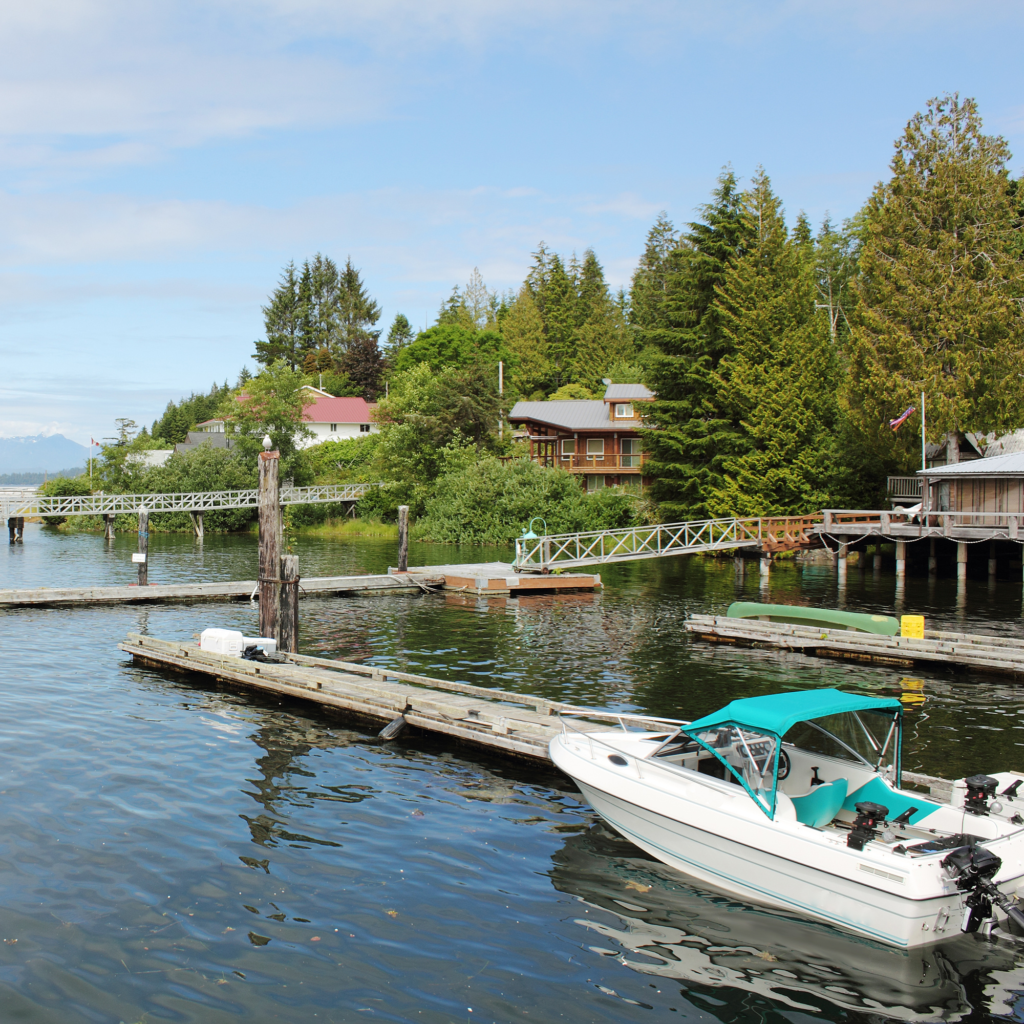
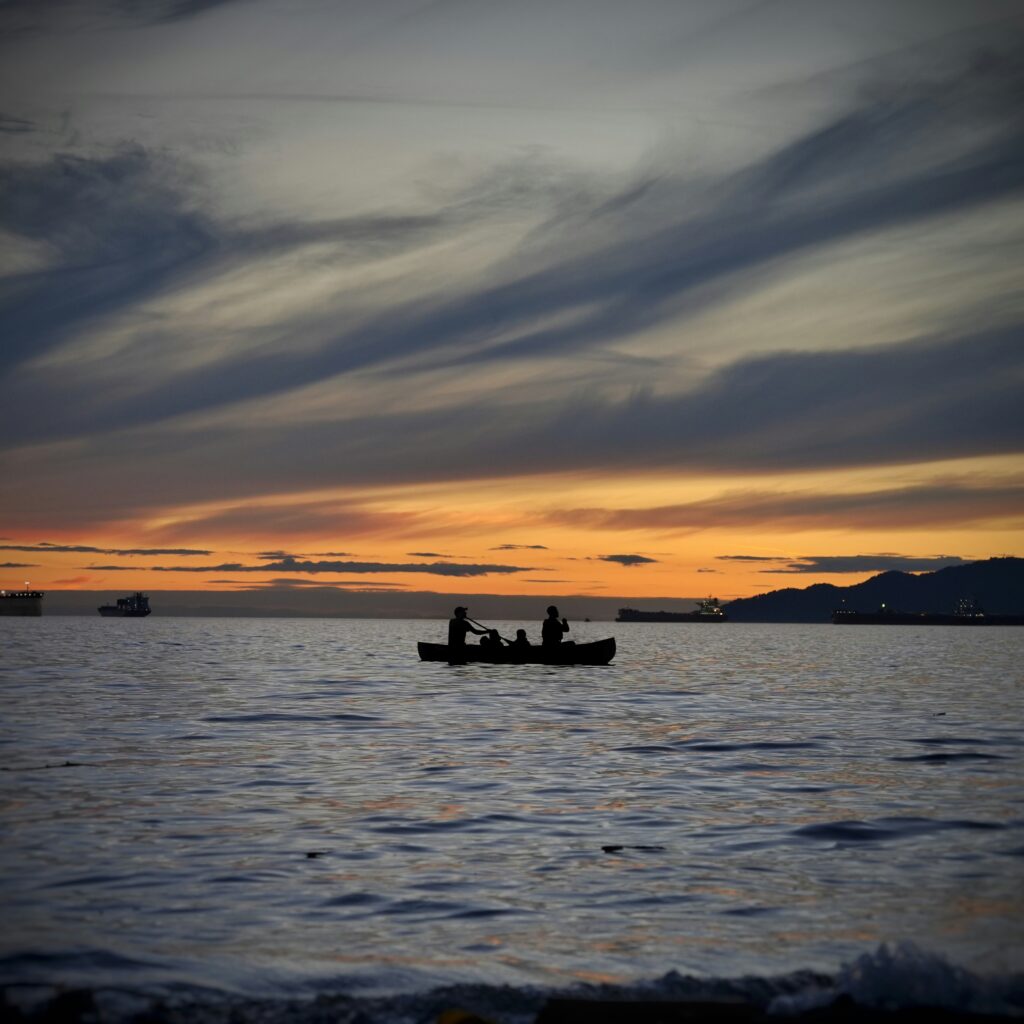
Bamfield, a town defined by the sea
Nestled along Barkley Sound in the traditional territory of the Huu-ay-aht First Nations on Vancouver Island’s rugged west coast, Bamfield’s history is shaped by the ocean.
For thousands of years, the Huu-ay-aht thrived here, relying on the ocean for halibut, cod, herring, salmon, seals, sea lions, and whales. At low tide, community members also gathered mussels and urchins and maintained “clam gardens” – unique, carefully managed areas that helped sustain their harvests. The remains of traditional longhouses still mark the site of the Huu-ay-aht’s ancient capital, Kiix̣in.
In the mid-19th century, William Eddy Banfield, an English trader and colonial government agent, established a trading post on Huu-ay-aht land. The town that grew around it – and took on his (misspelled) name – became a maritime hub for European settlers. Driven by the demand for oil and fur, commercial hunters of these settlements killed whales and otters to near extinction, devastating local ecosystems.
Another chapter in Bamfield’s history began in 1901 with the construction of the Pacific Cable Station. This facility marked the eastern terminus of the trans-Pacific telegraph cable, which connected Canada to countries on the other side of the world. One of these buildings now houses the Bamfield Marine Sciences Centre, a bustling research centre that helps drive local conservation efforts.
In 2011, the Huu-ay-aht were recognized by the Province of B.C. as a self-governing Treaty Nation under the Maa-nulth Treaty and have since bought back some of their land in Bamfield, unlocking new tourism opportunities. Today, the community continues to revitalize traditional stewardship practices and co-develop maritime management plans based on Huu-ay-aht principles of ʔiisaak (respect), ʔuuʔałuk (taking care of), and Hišuk ma c̕awak (everything is one).
Several sport fishing lodges, outdoor tourism businesses, and charter boat companies now dot the region. Bamfield is also the terminus stop for hikers on the 75-km-long West Coast Trail, and its ocean wonders regularly attract tourists from around the world.
This glimpse of the history of Bamfield reflects how settler colonialism in B.C. has harmed coastal communities, marine life, and First Nations’ rights to their lands and waters.
For many Indigenous cultures across the province, the ocean has always been a sacred part of identity, culture, and history. It is still a source of knowledge, healing, and spiritual connection, and stewardship decisions are often made with future generations in mind.
Systemic oppression has disrupted Coastal First Nations’ relationships with their lands and waters. These barriers also pushed them out of important decisions about how coastal areas are managed. In turn, many Crown government policies have ignored Indigenous knowledge and community needs.
In recent years, important agreements have offered hope that progress is possible across B.C. One example is the Great Bear Sea Project Finance for Permanence, a network of Marine Protected Areas co-led by seventeen First Nations with the Governments of Canada and B.C.
As Christine Smith-Martin, CEO of Coastal First Nations, and Merv Child, Executive Director of the Nanwakolas Council, stated in a Nature United release:
“The Great Bear Sea PFP flows from our Nations’ governance and stewardship responsibilities that date back tens of thousands of years. The PFP also reflects our commitment to collaborative approaches that bring all parties to the table.”
Watch some of the Great Bear’s most iconic species in these virtual reality clips.
Another major step is the Provincial Agreement on Haida Aboriginal Title, which formally recognizes the Haida Nation’s title over Haida Gwaii. This milestone reflects decades of Haida leadership, resistance, and stewardship in opposition to extractive development – instead emphasizing respect, balance, and shared decision-making grounded in Haida values.
These milestones show what can happen when Indigenous leadership is respected and supported. They remind us that protecting the ocean’s complex ecosystems is key to long-term community and economic well-being. They also underscore the importance of uplifting First Nations youth, who continue to defend the lands and waters central to their cultures.
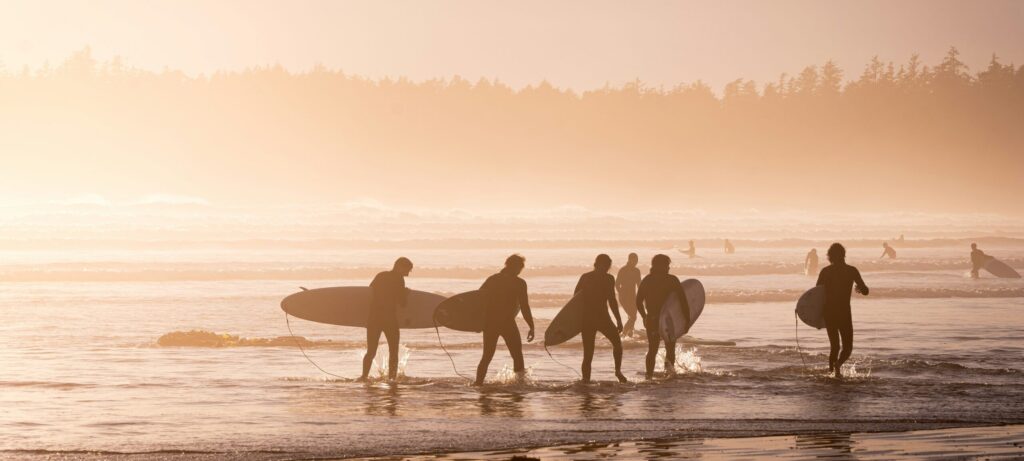
Despite this progress, significant barriers still shape who can access the ocean. Economic and infrastructure constraints, geographic isolation, historical and ongoing inequities, and governance and policy exclusions limit the ability of many marginalized communities to benefit from and connect with the sea.
A giant conveyor belt of life
“We must protect what is us, because we are the ocean. We’re all a drop in the ocean and the ocean in a drop.” – Bodhi Patil, Youth Ocean Advocate, Institute of Natural Law
“On a physical level, our bodies remember water. We have the same mammalian dive response that whales, dolphins and seals have. A complex series of physiological adaptations are set in motion when we spend time underwater on one breath, and we become our aquatic mammalian selves.” – Hanli Prinsloo, Founder, I am Water (as quoted by the BCC)
Life in the ocean is constantly shifting, with tides, currents, and even fish acting like giant conveyor belts, similar to the baggage carousels found at airports. They carry nutrients from the deep ocean to the surface, and back and forth between the coast.
When you notice these energy flows, you’ll see that the coastline is a bridge that connects marine and land life. For example, migratory fish like Pacific salmon feed birds, wolves, and bears as they swim upstream to spawn. Once the eggs hatch, freshwater streams and floodplains provide young salmon with a safe place to grow before they journey to estuaries, where they will adapt to saltwater before heading to the sea.
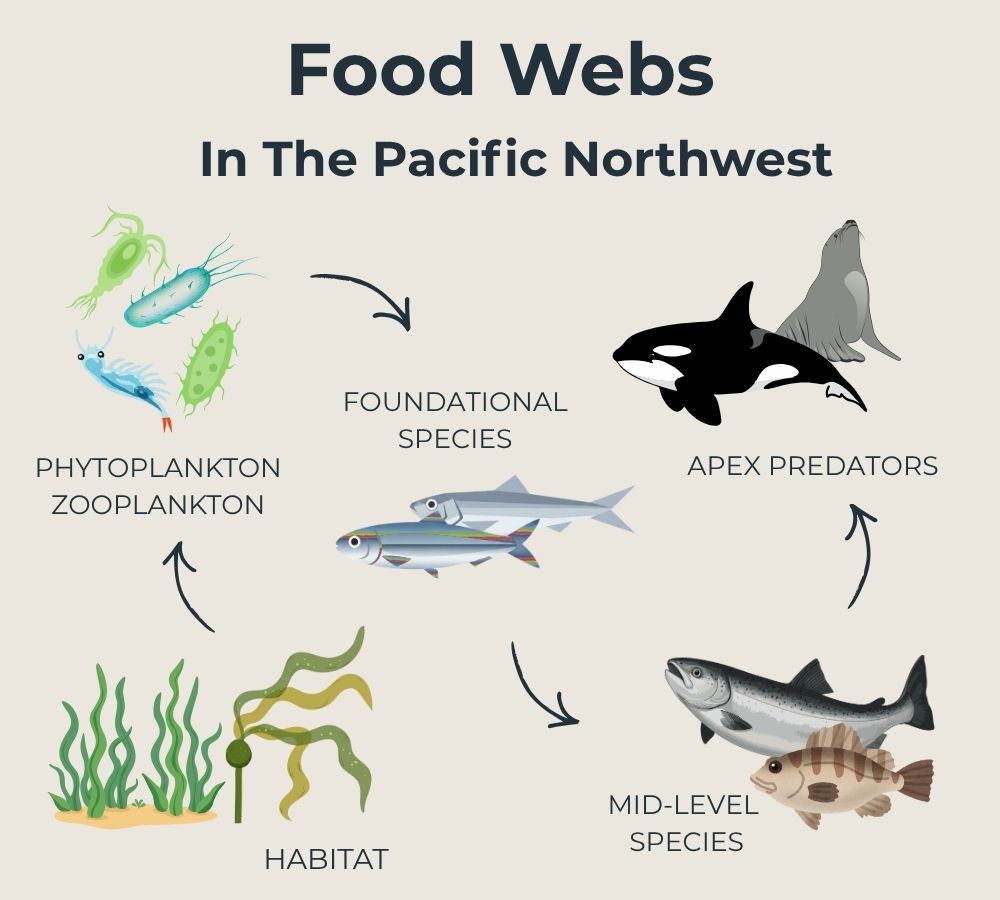
Pacific wild salmon and Pacific herring are excellent examples of foundational species, which support entire ecosystems through their roles in energy transfer. In B.C., five species of Pacific wild salmon – Chinook, coho, sockeye, pink, and chum – play these critical roles, shaping the health of rivers, forests, and oceans alike. Herring, too, provide a vital food source for a wide range of marine organisms, including apex predators, helping to keep the ecosystem in balance.
You can see salmon and herring pictured in the middle of the graphic below.
Quiz: Test your knowledge!
What maintains this careful system of abundance?
At the base of the food chain, species like kelp, seagrasses, and plankton harness energy from the sun through photosynthesis, fueling the entire marine food web.
These habitat species connect us to the ancient past — for instance, the seagrass meadows of Isola, Spain, have existed for thousands of years. Throughout history, they have survived major climate shifts and quietly stabilized coastlines while storing carbon.
Kelp has an equally deep history. Giant kelp forests have shaped coastal ecosystems for millions of years, evolving alongside marine mammals, fish, and invertebrates.
These towering underwater giants are food for plant-munching animals like snails and starfish, and provide shelter for creatures like octopuses or young salmon. Kelp forests are essentially bustling underwater cities, and they’re in trouble.
Warming waters and habitat loss, among other factors, are causing catastrophic declines in kelp along the Pacific coast. Scientists are now tracking global changes in kelp and seagrass distribution using new satellite and mapping technologies to understand how quickly these shifts are occurring.
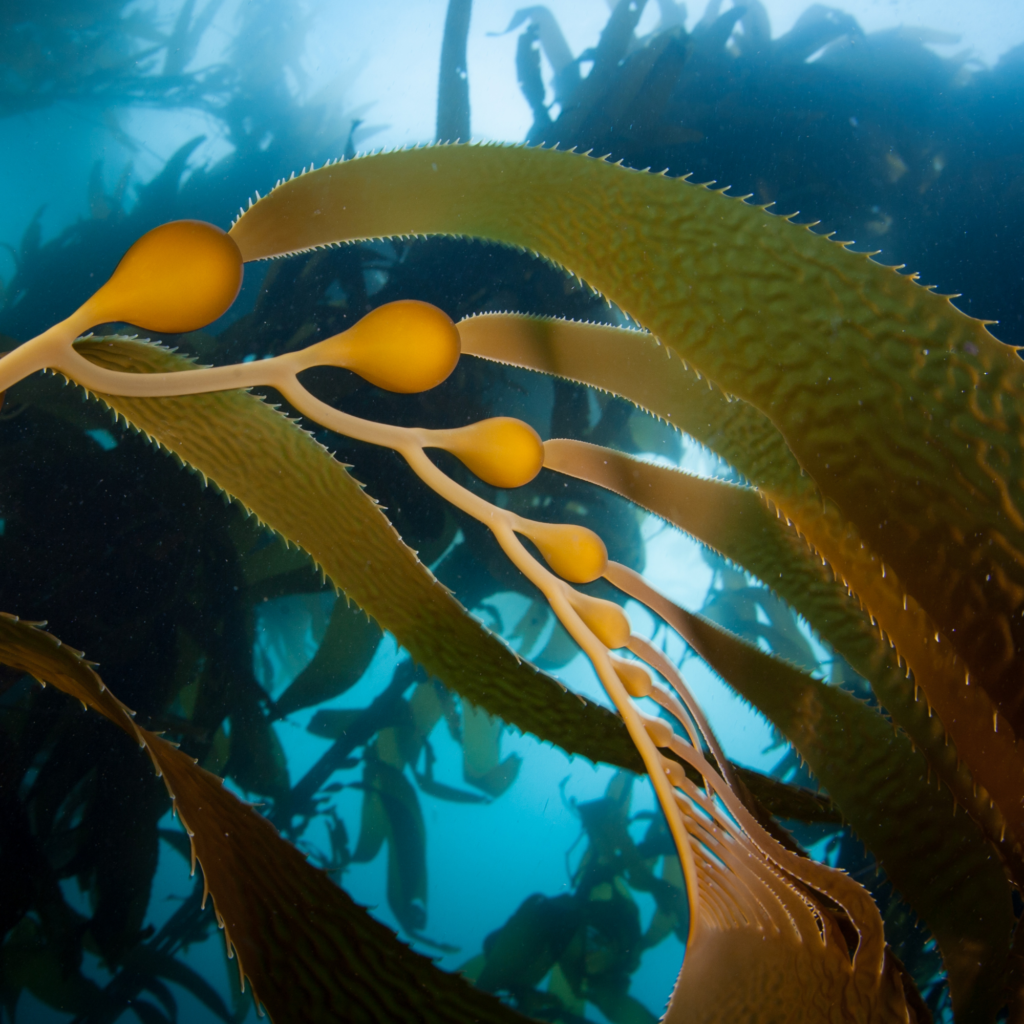
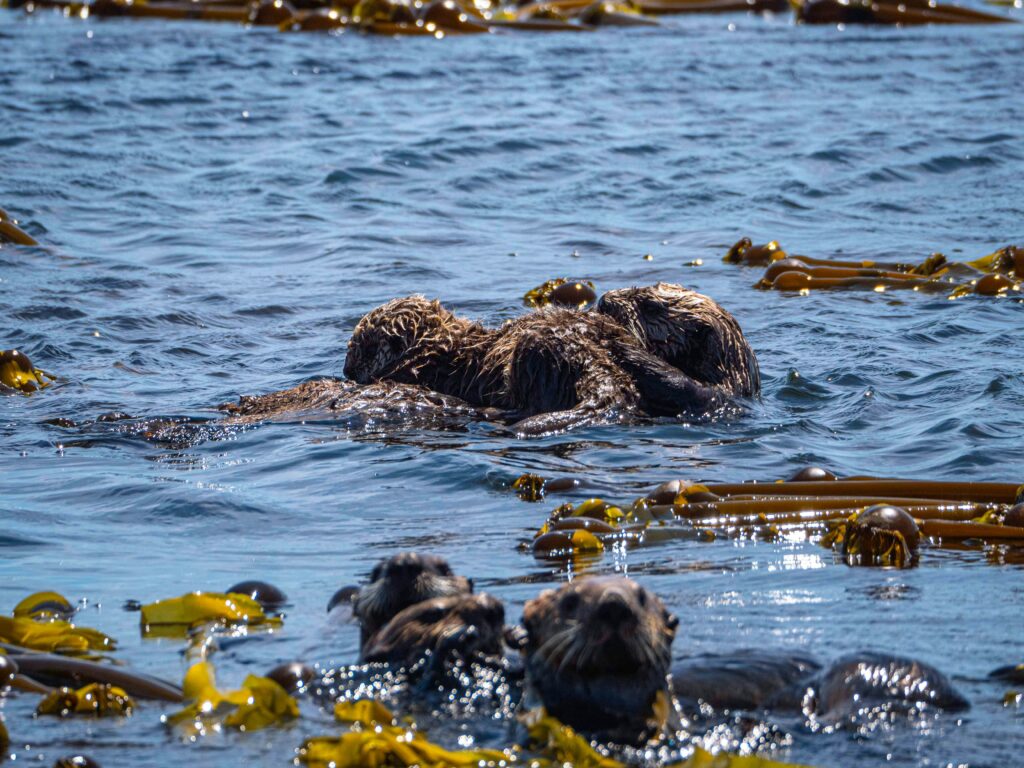
Invasive wildlife can also threaten kelp. Animals, like bryozoans – tiny encrusting creatures – can grow all over kelp blades and deplete the kelp, ultimately reducing the amount of habitat available for other species. Sea urchins are also a threat. Without predators like sea otters to keep urchin populations in check, these spiky creatures can devour kelp forests and create barren wastelands.
Across B.C., different communities and organizations are collaborating to restore kelp forests and seagrass meadows. But there’s a challenge: most restoration projects plant kelp or grass clones — genetically identical pieces of the plant.
The big takeaway here? Biodiversity matters because it supports stability, adaptation, and resilience across entire ecosystems. When diversity is high, food webs are better able to withstand threats and recover from disturbance.
Bringing otters back to sensitive ecosystems in Haida Gwaii
“Chiix̱was gen gaguu gataa daanaay guu ga taa iijii (when the tide is out, the table is set).” — Haida saying (as shared by James Cowpar with the National Geographic)
During the fur trade frenzy of the 18th and 19th centuries, Kuu (wild sea otters) were decimated in the Haida Gwaii archipelago off B.C.’s west coast. For generations, the Haida people had hunted otters selectively, carefully managing the species to preserve the food resources otters favoured. But colonial settlers hunted otters to near extinction, disrupting this balance and leaving kelp forests vulnerable to urchin takeovers.
A few years ago, Haida marine biologist Gwiisihlgaa (Dan McNeill) joined a science task force to collect shellfish data. Their goal was to support the design of an ecosystem model to guide future marine stewardship efforts.
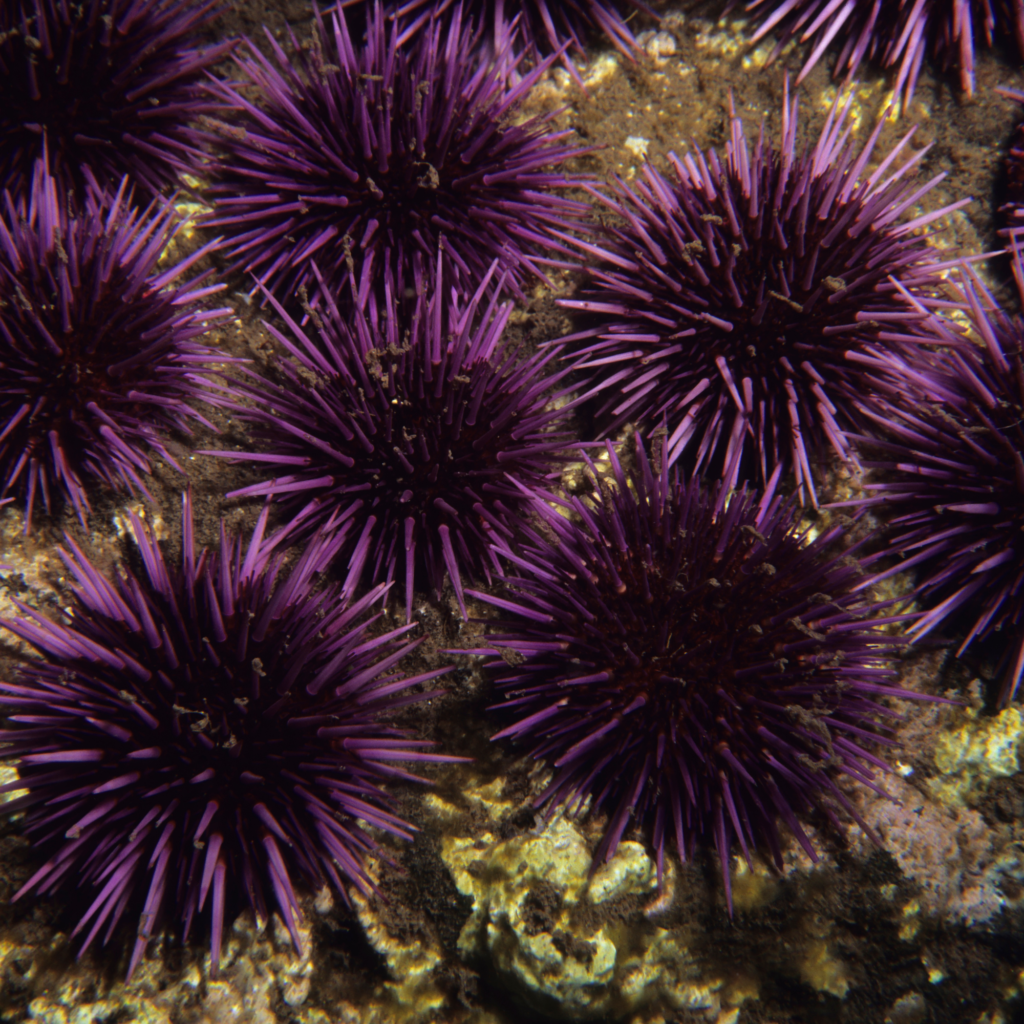
Armed with a wetsuit, scuba tank, and hammer, McNeill and his team began collecting sea urchins along the Gaysiigas Gwaay (Murchison Island) shoreline. Large urchins were harvested, while others were smashed to bits – essentially mimicking what sea otters would do in this environment to support kelp recovery.
“I think well over a half million urchins have been removed from the research site now,” McNeill shared in this Narwhal article. “And there’s easily another hundred thousand [remaining].”
Sea life can take over quickly, once given the chance. Almost immediately after the urchins were removed, bull kelp took root at this site and began growing at up to 25 cm per day.
Today, McNeill serves as the marine stewardship director on the Council of the Haida Nation, which recently developed a management plan to anticipate, support, and prepare for the sea otters’ return to the archipelago. The ecosystem model he helped collect data for will now be used to predict the outcomes of different sea otter management strategies.
This is no small task. Without sea otters, some Haida harvesters have come to rely on booming shellfish populations – particularly urchins – and worry that the otters’ return could disrupt the industry. Otters might also feed on at-risk species like abalone, which are so endangered that harvesting has been restricted. Still, helping otters recover is important for restoring balance in local ecosystems and reviving vital kelp forests.
Over time, different species interact in ways that help keep ecosystems in balance, and these relationships are often more complex than they appear. Removing even one species from this careful system can be incredibly disruptive.
It’s important to remember that humans are part of ocean ecosystems as well, and we can help support the recovery of struggling species. However, there is rarely a single way forward, and much remains unknown about what keeps an ecosystem healthy over the long term. When people intervene without enough care or understanding, the impacts can be difficult to predict and hard to reverse. This uncertainty calls for care, patience, and a willingness to keep learning.

Let’s return to foundational species. Sadly, kelp isn’t the only one at risk in B.C. Forage fish – small schooling fish like herring, anchovy, smelts, and sand lance – are an essential energy source in the ocean food web. They sustain predators such as salmon, whales, and seabirds while also supporting Indigenous food systems and local fisheries.
Herring, in particular, are well known in B.C. for their spectacular spawning displays. Every year between February and April, they lay their eggs in the shallows, turning the surrounding waters a shimmering turquoise.
Unfortunately, there is strong evidence that Pacific herring are declining in different areas of B.C. These declines are not fully explained by natural population cycles like predation or yearly environmental changes and have been linked to overfishing, which has been repeatedly manifested as species collapses throughout B.C.
Protecting foundational species like herring will rely on rigorous, independent science working together with Indigenous knowledge and stewardship practices — as well as clear, coordinated action to support their recovery.
Restoring Pacific herring – and health – in Howe Sound
Átl’ḵa7tsem (Howe Sound) stretches past Vancouver like a finger pointing North. This breathtaking fjord is framed by towering cliffs, carved by glaciers over millennia.
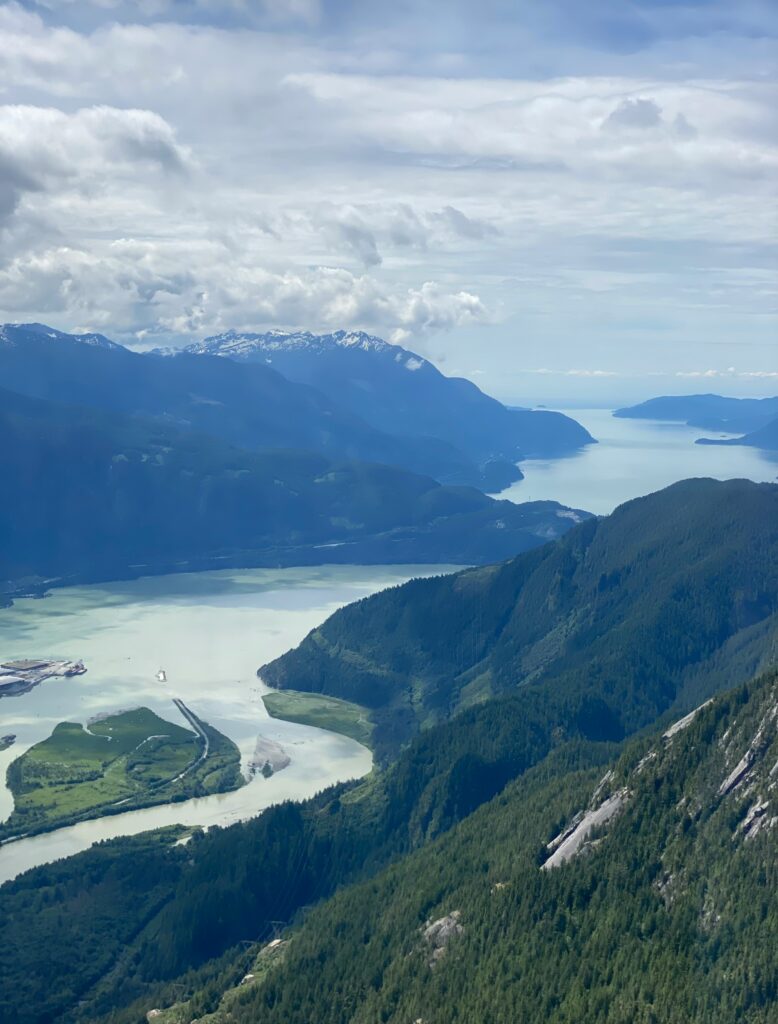
For generations, Sḵwx̱wú7mesh Úxwumixw (Squamish Nation) stewards placed cedar and hemlock branches in the Sound to attract herring and collect their nutrient-rich eggs. But over time, industrial overfishing, habitat destruction, and pollution pushed herring populations to the brink.
For much of the 20th century, Howe Sound was choked with industrial waste. Two pulp mills, chemical plants, and the Britannia copper mine, which operated until 1974, released toxic heavy metals, bleaching agents, and sediment into the water. The effects were devastating. In fact, many marine species, including herring, nearly disappeared from the Sound.
In recent decades, local communities have mobilized to bring Howe Sound back to health. As pollution levels dropped and habitats recovered, herring began to return. And where herring go, salmon, dolphins, and killer whales tend to follow.
Jonny Williams, a young citizen scientist and Nexwsxwníw̓ntm ta Úxwumixw (council) member, has often spent the springtime scanning the waters of Howe Sound for signs of herring. As reported by the Narwhal, he could volunteer for hours piloting a small aluminum boat, snorkelling, logging herring sightings, and harvesting shellfish or cliff diving.
Since 2020, volunteers and Squamish Nation members like Williams have been monitoring the herring spawning events with the Átl’ḵa7tsem / Howe Sound Marine Stewardship Initiative (MSI). Keeping tabs on these small but mighty fish during Tem Lhawt’ (the time of herring) will help local stewards understand how to restore, conserve, and protect them.
The return of herring has brought back a long-missed delicacy for Squamish people – the salty, crunchy ch’em’esh (herring eggs) – and is helping rebuild both local ecosystems and stewardship practices.
Learn more about the ongoing challenges herring face. Created by Take Stand member MacKai Sharp, this short film explores issues surrounding the future of forage fish species.
Ripple effects up the ocean food chain
The health of B.C.’s coastal ecosystems relies on a delicate balance, but human activity is driving widespread disruptions that can upend entire food webs. These impacts don’t occur in isolation. Over time, they compound, creating ripple effects that leave marine ecosystems even more vulnerable.
As noted above, overfishing in B.C. waters can deplete key species like herring and salmon, cutting off essential food sources for marine predators and coastal communities. As fish populations decline, predators must compete for dwindling resources or face starvation.
At the same time, pollution is degrading important habitats along the Pacific coast. Industrial and agricultural runoff, microplastics, and contaminants from aquaculture, among other factors, can introduce harmful toxins into ocean waters.
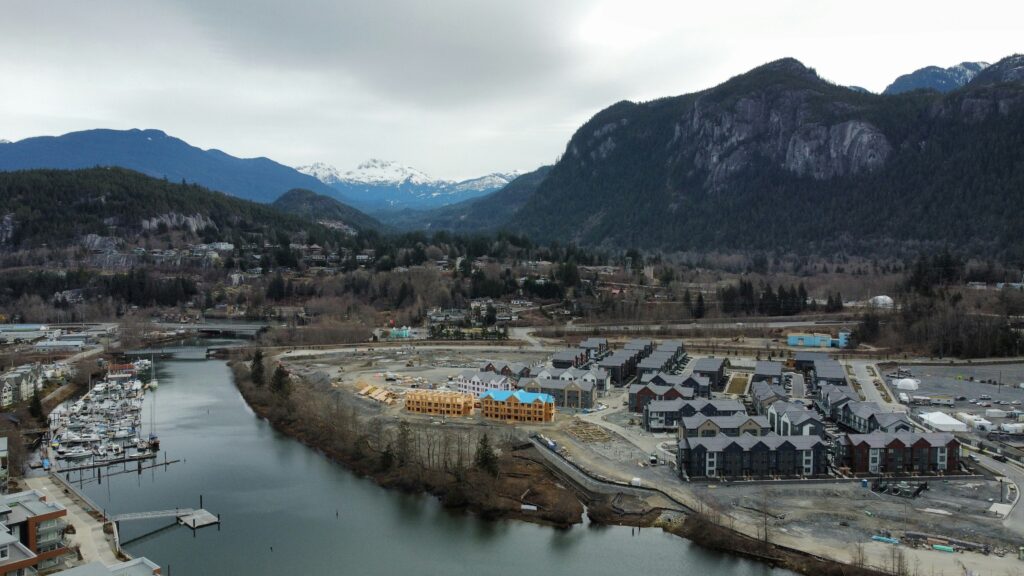
Shoreline hardening – the construction of seawalls, docks, and other coastal infrastructure – also erodes natural habitats, making it harder for marine plants to take root and forage fish to spawn. When natural shorelines are replaced with hard materials, the coastlines of B.C. have less of a buffer against storms and erosion.
Evidence of the cumulative pressures on our marine ecosystems can be found all along the Pacific coast.
Take Howe Sound as an example. To summarize a complex story, industrial pollution made the waters uninhabitable for forage fish like herring, but overfishing compounded the problem. Without herring, salmon suffered. With the pollution and dwindling salmon numbers, killer whales and other marine mammals retreated from Howe Sound. The entire ecosystem felt the loss.
The decline of kelp forests in Haida Gwaii is also a layered crisis. Warming waters and pollution weakened kelp, while unchecked sea urchin populations – once controlled by sea otters – stripped away what remained. When kelp disappeared, many creatures lost their shelters, forage fish didn’t have as many places to lay their eggs, and predators were left with fewer food sources.
What about climate change?
These challenges are getting worse as climate change intensifies. When we burn fossil fuels like coal, gas, and oil, cut down forests, and raise herds of methane-burping cows, we add more heat-trapping gases into the atmosphere. This buildup of carbon dioxide and other gases acts like a thick blanket, trapping heat and causing the planet to warm up.
“Global warming – an increase in the average temperature of the planet – isn’t something we notice directly in our daily lives. What we do notice, though, is global weirding.” — Katharine Hayhoe, Chief Scientist, The Nature Conservancy
Because water absorbs heat faster, 90% of climate change is happening in the ocean – and it’s accelerating. New research shows the ocean is already warming 4 times faster than it did in the 1980s.
Unfortunately, climate change compounds with other problems we’re seeing, making them worse and creating new challenges.
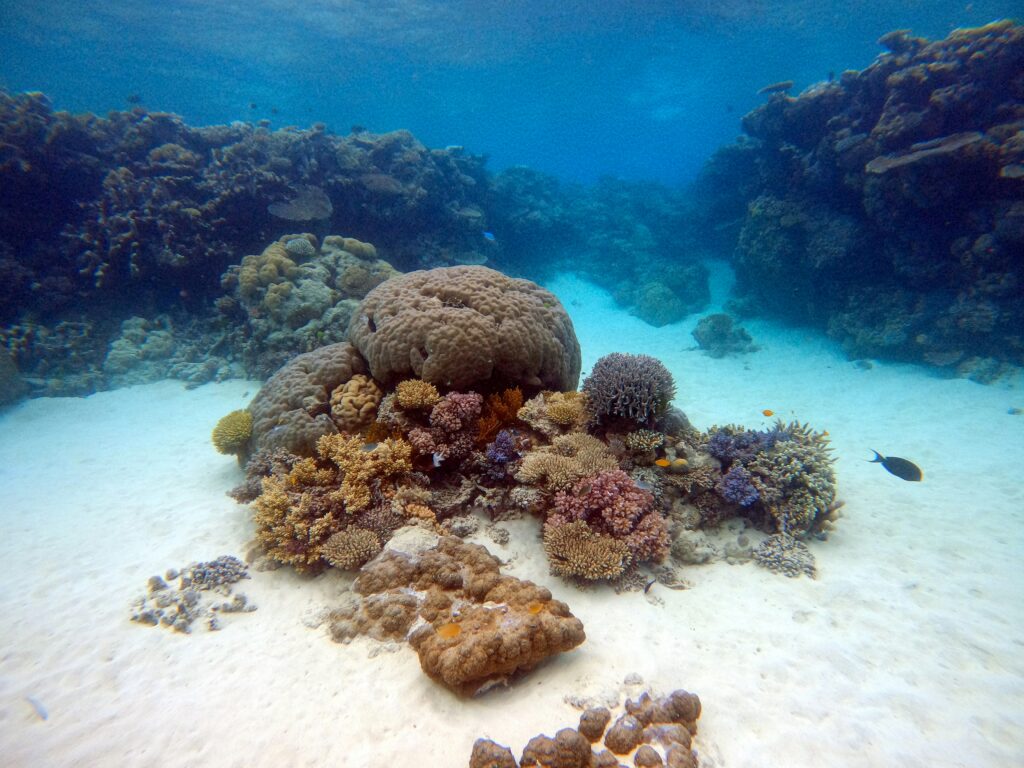
Rising ocean temperatures and acidification can kill corals, disrupt marine food webs, and force marine species to migrate to cooler waters. Warmer waters hold less dissolved oxygen, leading to “dead zones” with low oxygen levels that can suffocate marine life.
Rising sea levels lead to coastal flooding, displacing or eliminating species that rely on the shallows. Marine heatwaves are also becoming more common, with destructive effects on marine life.
One thing to keep in mind is that climate change can cause new impacts out of the blue. For example, in the Great Barrier Reef in Australia, warmer waters are breaking down the delicate relationship between corals and the tiny algae that keep them alive – with big consequences for the reef.
Everything that happens in the ocean affects us, too. While this can feel overwhelming, it’s important to remember that there is no single point of no return. Every action and every positive change, especially when people come together, can make a difference. Addressing these cascading challenges means looking at the bigger picture: protecting foundational species and apex predators, restoring damaged habitat in marine and interconnected ecosystems, and ensuring ocean ecosystems have what they need to bounce back from these challenges.
Heiltsuk salmon and bear stewardship
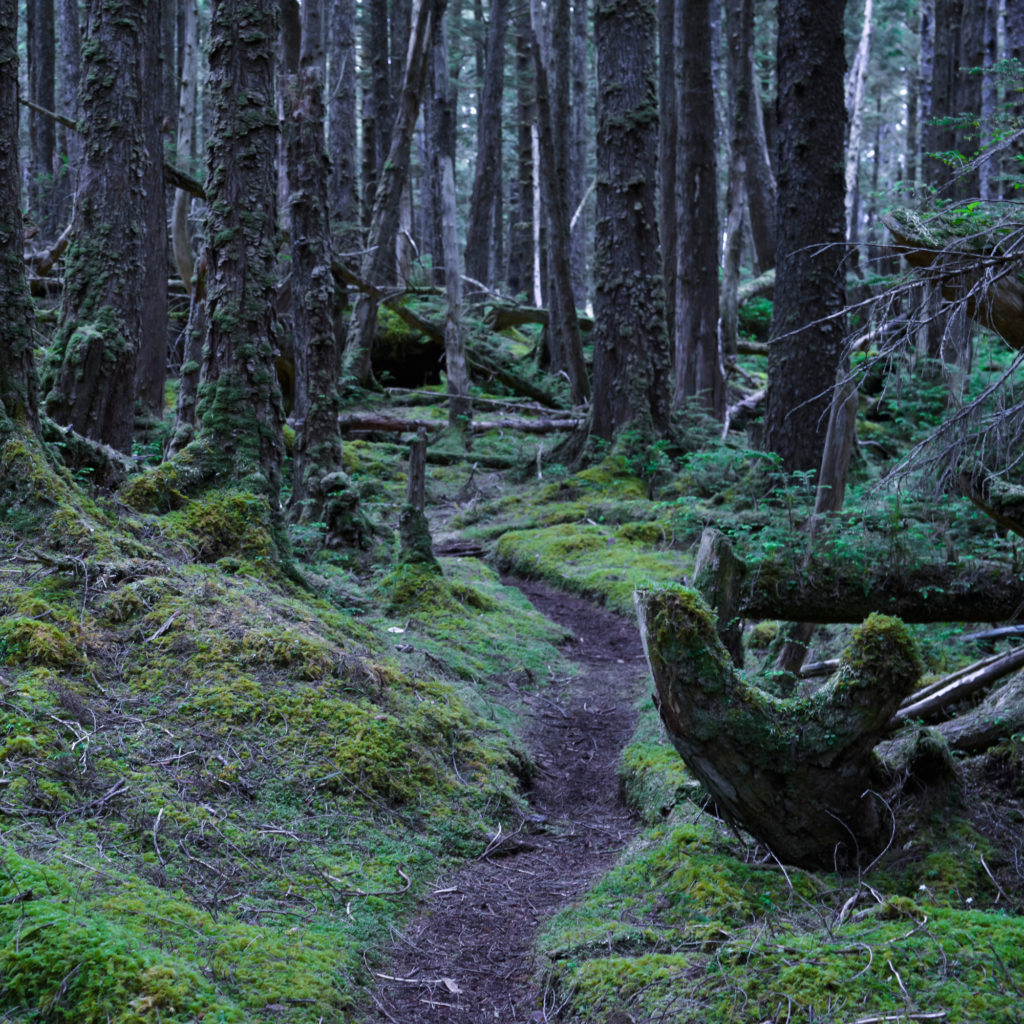
The Haíɫzaqv (Heiltsuk Nation)’s traditional territory is at the heart of the Great Bear Rainforest on the Central Coast of B.C. Its mist-shrouded valleys, old-growth forests, and quiet coves provide important habitat for species like grizzly bears and humpback whales.
In this incredible landscape, many Heiltsuk children learn about species interdependence through salmon and salmonberries. As Cúagilákv (Jess Housty) explains in Hakai Magazine:
“A good crop of salmonberries, we are told, corresponds to a good salmon run and luck in the harvest, and a poor crop is an early signal that we should turn to other species for our winter stores.”
Scientific papers in recent years have described what Coastal First Nations already know: the nutrients that Pacific salmon bring from the ocean to freshwater streams support forest – and salmonberry – growth. As salmon die, bears and other animals spread carcasses along riverbanks, helping fertilize the soil. In turn, salmonberries feed birds, bears, and other mammals, sustaining the ecosystems that salmon rely on.
Throughout history, Heiltsuk community members have contributed to this system of abundance each year by clearing woody debris, chasing seals away, and occasionally chopping trees to create refuges for returning salmon.
But in recent years, the Heiltsuk have observed dramatic declines in salmon and other marine species like herring and Dungeness crabs, in part due to climate change and overfishing. In 2016, the cargo tugboat Nathan E. Stewart ran aground. It spilled over 110,000 litres of diesel in Heiltsuk waters, devastating local ecosystems and making the harvest of at least 25 food species impossible.
Despite these mounting challenges, the Heiltsuk continue to protect traditional food systems and lead conservation efforts in their territory. For example, the Heiltsuk Integrated Resource Management Department (HIRMD) and other Coastal First Nations deploy Coastal Guardian Watchmen to monitor and restore salmon populations. Their field assessments have informed numerous conservation initiatives, including one focused on grizzlies.
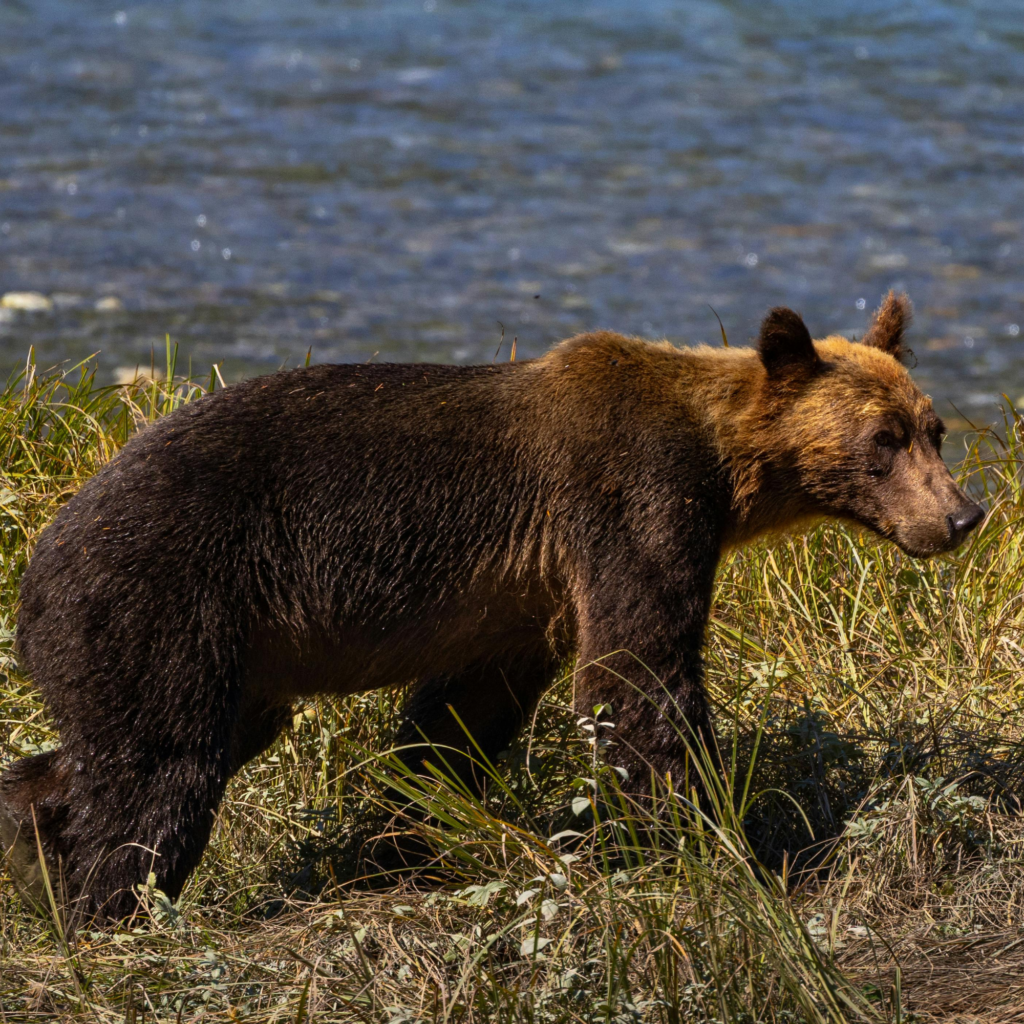
If “you protect grizzly bear habitat, you’re protecting black bear habitat, wolf habitat, deer habitat and many other species,” says Dúqva̓ísḷa (William Housty), director of HIRMD, in Live Science. “When you have lots of bears, it means you have a healthy ecosystem.”
In the 2010s, Housty’s team and their partners took a new approach to bear monitoring. Rather than using tracking collars, they created noninvasive, salmon-scented bear snares and attached them to over 100 trees. These “snares” were able to garner a small amount of the bear’s fur without harm. The bears would rub themselves on the snares and leave hair samples, which were analyzed for DNA to track their movements.
This innovative approach, in collaboration with scholars, conservation experts, and community leaders, has helped identify key bear travel corridors and strengthen protections for bear habitats. The success of these collaborations also reinforced the Heiltsuk’s advocacy with Crown governments for resource management decisions that reflect Heiltsuk values.
Check out this short documentary about grizzlies in the Great Bear Rainforest:
The ocean is changing, and so are we.
Protecting and restoring B.C.’s unique coastal ecosystems isn’t “just” an environmental issue. Our cultural, economic, and social well-being depends on the waters that sustain us. But as climate change accelerates, alongside continued resource exploitation and habitat destruction, pursuing opportunities to protect marine life feels more urgent than ever.

Across B.C., people are rising to the challenge. For decades, Indigenous communities like the Haida, Squamish, and Heiltsuk, and several other Nations along the Coast of B.C. have led ocean conservation efforts while reclaiming traditional stewardship practices and defending food sovereignty.
Did you know? Food sovereignty is the right of people and communities to define their food systems, ensuring access to healthy, culturally appropriate, and sustainably produced food.
Through bold action and collaboration, ocean lovers in B.C. are making a difference. Thousands of individuals, communities, and organizations are working together to bring back foundational species like herring, sea otters, and grizzlies, and restore balance in coastal ecosystems.
Stewardship insights: The work behind ocean conservation
1. Monitoring to understand what’s happening
Before we can protect or restore an ecosystem, we need to understand what’s changing and why. Monitoring involves collecting data, tracking trends, and identifying threats to marine life. Comparisons to historical data can also help establish baseline levels.
During herring season, volunteers like Jonny Williams (featured above) spend their days on the water tracking these silver forage fish. They snorkel to gather data on herring spawning across Howe Sound. Their work helps us understand where, when, and how herring spawn in the sound – and how we can protect them.
Who else monitors marine life in B.C.? Here are just a few examples:
- Marine biologists studying ocean chemistry and species interactions
- Coastal geologists studying the effects of earthquakes and storms on coastal ecosystems
- Guardian Watchmen from Indigenous communities patrolling their territories, recording changes in fish stocks or pollution levels
- Citizen scientists reporting their observations on the ground, from jellyfish blooms to orca sightings (e.g. SIMRES, SGIWSN, Critical Distance – Whale AI)
- Stream and creek walkers who monitor and understand ecosystem interactions and how freshwater systems affect marine ecosystems
2. Planning a way forward
Conservation planners and leaders work with others to design effective strategies for protecting and restoring coastal ecosystems. Data, traditional knowledge, and other information help inform these strategies and improve their odds of succeeding without causing further harm. This work often involves making tough decisions and balancing the multiple needs and priorities expressed by relevant parties.
As the marine stewardship director at the Council of the Haida Nation, Gwiisihlgaa (Dan McNeill), featured above, works with other Indigenous leaders, scientists, and policymakers to develop management plans for marine ecosystems in Haida territory. Leaders like McNeill can help find solutions that balance conservation with local livelihoods and plan effectively for the future.
Other planning roles include:
- Climate adaptation specialists designing marine protected areas and restoration projects
- Fisheries managers setting sustainable harvest limits and rebuilding fish stocks, considering the needs of different communities and species.
- Legal advocates working on policies that recognize Indigenous sovereignty and conservation rights
3. Rebuilding ecosystems for the future
Restoration efforts range from hands-on habitat conservation efforts to policy changes that protect the long-term health of an ecosystem. This work often requires large-scale collaboration and ongoing community involvement.
Dúqva̓ísḷa (William Housty), featured above, leads the Heiltsuk Integrated Resource Management Department. His team undertakes habitat restoration projects in salmon streams, protects the forest corridors grizzlies use to travel between feeding grounds, and advocates for management decisions affecting Heiltsuk territory that align with Heiltsuk values.
Other types of restoration roles include:
- Reef experts restoring oyster beds and kelp forests
- Wildlife rehabilitators caring for injured or orphaned marine animals
- Policy changemakers advocating for stronger environmental protections
You are part of this story, too.
Protecting ocean ecosystems in B.C. is complex, long-term work. It unfolds amid ecological uncertainty, climate disruption, competing economic pressures, and deep social and historical inequities. While community leaders, scientists, and Indigenous Nations often bear much of this responsibility, ocean stewardship is not – and should not be – limited to experts alone. All of us, whether we live on the coast or far inland, shape marine futures through our choices, relationships, and willingness to stay engaged, even when progress feels slow.
There is no single “right” way to help. Meaningful action often looks incremental, collective, and imperfect. What matters is learning to show up with care, humility, and curiosity.
So, what can we do?
Participate in community science.
Across B.C., volunteers help monitor shorelines, track salmon returns, document forage fish habitats, track kelp and eelgrass health, and report unusual ocean conditions. These efforts help fill critical data gaps, especially in remote regions where long-term monitoring is limited. Programs like shoreline surveys, beach seine monitoring, and salmon counts also build local knowledge and connection, even as ecosystems continue to change in unpredictable ways.
Support Indigenous stewardship and governance.
Many of the most impactful ocean conservation efforts in B.C. have and continue to be led by Indigenous communities, grounded in thousands of years of place-based knowledge and responsibility. Supporting this work means learning whose territory you are on, respecting Indigenous laws and decision-making, and advocating for policies that uphold Indigenous rights and title. A good example is standing alongside BC Coastal First Nations to continue upholding the oil tanker ban on the Central-North coast.
Where can young people play a part? To establish the Great Bear Sea initiative, youth used artwork, storytelling, and presentations to engage elected officials, helping build public and political support for long-term marine protection rooted in Indigenous leadership.

Reduce pollution, where and when possible.
Plastic and chemical pollution remain persistent challenges, and individual actions alone will not solve them. Still, everyday choices matter, especially when paired with collective pressure for better systems. Rivers and storm drains carry waste directly into salmon habitat and coastal waters. Choosing reusables, participating in shoreline cleanups, and safely disposing of hazardous materials can reduce harm to the ocean, particularly in coastal communities and among people who boat or live near the water.
Make thoughtful seafood choices, if you can.
Choosing sustainable seafood options is rarely simple. Overfishing, bycatch, habitat damage, and shifting science all complicate what “sustainable” even means. If you are able to, learning about local fisheries, harvest methods, and management systems can help you make more informed choices.
Don’t forget: sustainability guides change as new data emerges. Some fisheries once considered responsible, including certain Alaska-caught salmon stocks, have recently been reassessed. It’s important to stay up to date when possible. Additionally, if you are able and willing, consider reducing the amount of seafood in your diet by incorporating some veggie-based meals throughout the week.
Try to speak up, even when it feels uncomfortable.
Policy change is slow, and advocacy can be discouraging, but it matters. Writing to decision-makers, attending public meetings, or supporting organizations pushing for stronger marine protections helps keep ocean issues visible. It also shows elected officials that these issues shape people’s votes. In recent years, youth-led climate and conservation groups across B.C. have repeatedly and successfully influenced local councils, school boards, and their local MLAs by grounding their asks in science and lived experience.
Create new stories about the ocean.
Art has long been a bridge between knowledge and care. In B.C., youth have used painting, photography, film, and writing to shift how people relate to marine ecosystems, such as through coastal exhibitions or school-based projects that connect ocean health to culture and climate. Creative expression does not offer easy answers, but it can open space for dialogue, increased awareness and empathy, and action.
A final reminder
There is so much we still don’t understand about the ocean and all the life it contains. As we work to conserve and protect marine life, it’s important to do so thoughtfully and with an open mind.
Every contribution, whether scientific, creative, political, or relational, adds to a broader effort to care for ocean systems under strain. There is room for uncertainty, learning, and rest in this work. Whether you are a future marine scientist, an artist, a policy advocate, or simply someone who loves the coast, your role matters.
What is your relationship to the ocean, and how might you care for it in ways that feel honest and sustainable for you?
Explore these resources to learn more.
- Watch the free film STAND, which explores the waters along B.C.’s west coast and highlights the advocacy of an Indigenous high school class building their own stand-up paddleboards as a form of protest.
- Explore the Wild Salmon Action Kit and our films that feature interviews with wild salmon experts
- Learn from peers: explore art and ways to fight ocean pollution in this content series.
- Watch films about the ocean created by students across B.C. here and here.
- Watch this short Grant CEA video created by students about the biodiversity of the Salish Sea and the threats it faces.
- Learn from peers: explore art about ways to take climate action in this content series.